

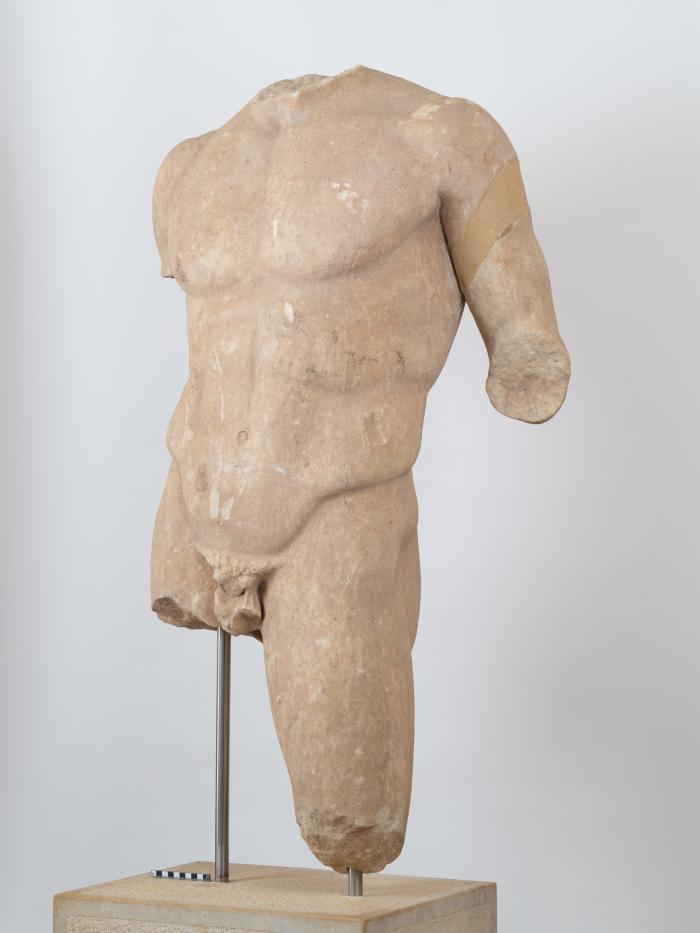
Doryphoros statue
Archaeological museum of ancient Messene
 7935 2
Link copied


Doryphoros statue
1st century BCE
Archaeological museum of ancient Messene
Gymnasion of ancient Messene
Statue
MarbleHeight: 145 cm

Torso of a naked male statue. Found in 1965 in area III of the Gymnasion of ancient Messene, along with fragments of the arms, legs and feet, which are integrated with the plinth and the support (palm tree) of the left static leg. This is a1st cent. CE copy of the famous bronze prototype of the 5th cent BCE, by the sculptor Polykleitos of Argos. The Doryphoros (spear bearer) was known in antiquity as the “Canon”, as the ideally harmonious and balanced paradigm of the beautiful and virtuous young man. He was holding a spear in his left hand, hence his name. The Doryphoros from Messene is one more example among the complete or incomplete roman copies now in Europe (Italy, Germany) and the USA (Minneapolis). The manufacture of the Doryphoros of Messene and its placing on a base of an earlier bronze one, seems to have taken place during the reign of Augustus, i.e. at the same period with the rearrangement of the area of the Gymnasion, the revival of the ephebia (adolescent service) and the construction of the monumental four-column doric propylon. The statue’s nudity and its larger than natural size indicates that it is not a mere mortal who is depicted, a winner in games, but rather a semi god or a hero. It is not unlikely that Doryphoros in indeed a depiction of Theseus, following the description of Pausanias, who saw in the Gymnasion statues of the protectors of adolescence: Heracles, Hermes and Theseus.